1. The Living Archive of Ancestral Weaving
Across the high-altitude villages of the Peruvian Andes and the volcanic highlands of Guatemala, an ancient form of record-keeping persists. It relies on neither ink nor paper, but on hand-spun alpaca wool, backstrap looms, and plant-derived dyes. For centuries, Maya and Quechua women have woven complex cosmologies, local lineage, and environmental knowledge directly into their daily garments.
Today, these traditional art forms face severe dual pressures: cheap synthetic industrial knockoffs mass-produced overseas and the systemic economic displacement of rural women. In response, Indigenous artisans across Latin America are organizing into self-governed weaving cooperatives to reclaim intellectual property, secure fair-trade pricing, and pass down generational knowledge on their own terms.
A single traditional handwoven huipil requires over 120 hours of continuous manual artistry.
Every pattern represents a distinct geographic dialect, sacred botanical knowledge, and community lineage that machine looms cannot replicate.
2. The Architecture of the Backstrap Loom
The backstrap loom (known in Guatemala as the telar de cintura) is one of humanity’s oldest continuous textile instruments. One end of the warp threads anchors securely to a post or tree, while the other straps directly around the weaver’s lower back. The artisan uses her body weight to control tension dynamically with every movement.
Represents agricultural cycles, human vitality, and sacred Maya origin stories.
Signals spiritual equilibrium, looking backward toward ancestors and forward toward future generations.
Differentiates regional identity between neighboring villages like Santiago Atitlán and Nebaj.
3. Real Collectives Reclaiming Economic Agency
Rather than relying on predatory commercial brokers who buy textiles for a fraction of their value, master artisans across Latin America are organizing structured collectives that merge cultural stewardship with direct financial autonomy:
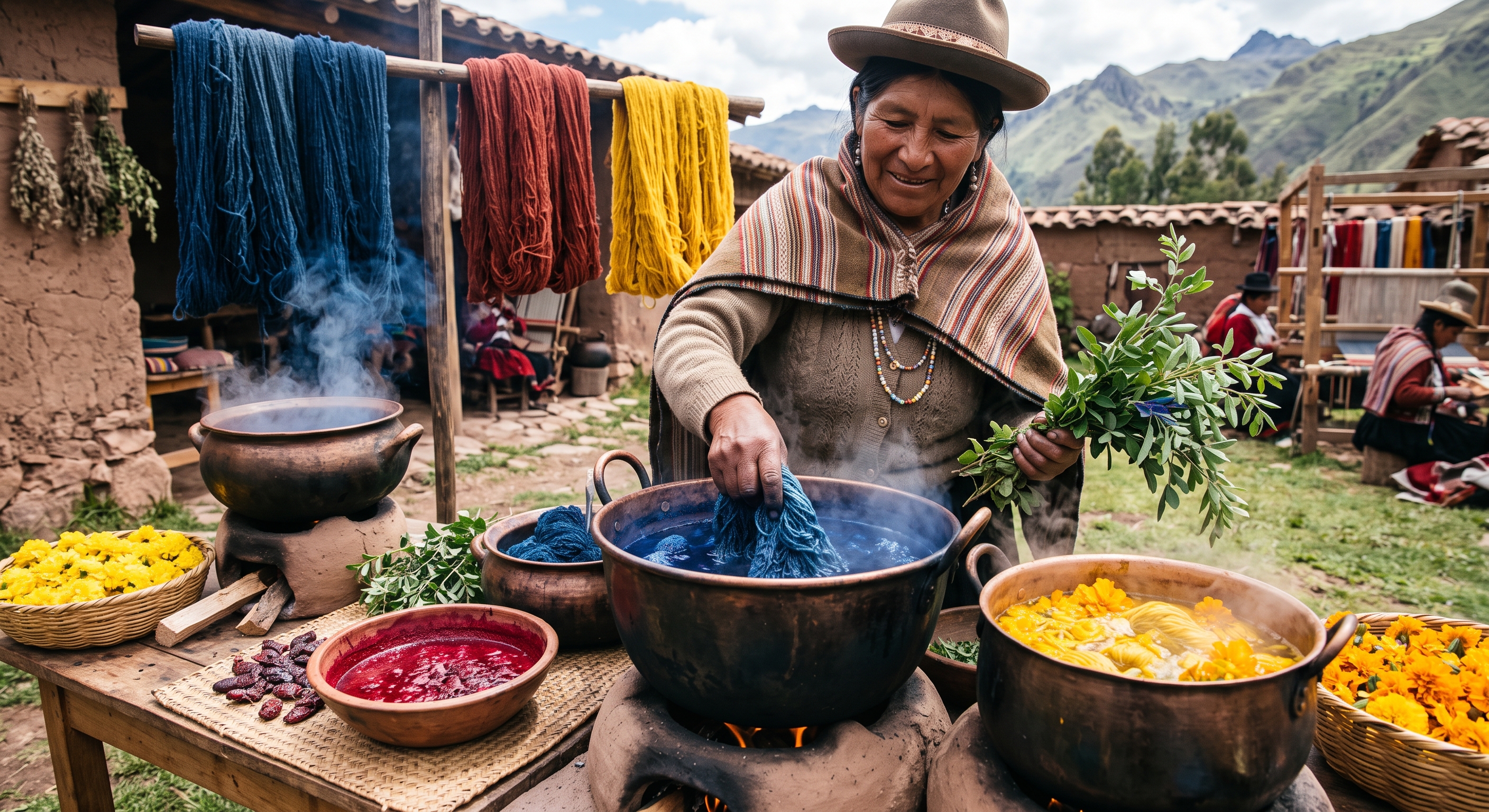
Organic cotton & plant-based indigo/cochineal dyes.
Bypasses local tourist intermediaries to export direct to global ethical markets.
Natural-dyed high-altitude hand spinning.
Provides governance training and direct market channels to high-mountain weavers.
Collective intellectual property protection.
Fights for statutory copyright recognition of traditional designs against corporate fast fashion.
4. Protecting Intellectual Property as Living Heritage
In Guatemala, the Movimiento Nacional de Tejedoras (spearheaded by AFEDES) has ignited an international debate over intellectual property rights. Foreign fashion conglomerates frequently digitize traditional Maya patterns for mass production in overseas factories without attribution, consent, or compensation.
Traditional IP frameworks, designed around individual ownership and corporate patents, fail to protect collective cultural heritage that has evolved intergenerationally over centuries.
"Our textiles are not decorative merchandise. They are our books, our geography, and our historical memory. Protecting a pattern is protecting our identity."
— Maya Master Weaver & AFEDES Community Organizer
5. The Path Forward: Economic Justice Through Craft
Preserving indigenous artistry is not an act of static preservation or charity, it is an active exercise in economic self-determination. By combining sustainable cooperative governance with international fair-trade pipelines, the women of LATAM are ensuring their ancestral art forms remain living, thriving economic engines.
References & Strategic Resources
- AFEDES (Asociación Femenina para el Desarrollo de Sacatepéquez): Iniciativa de Ley para la Protección de Propiedad Intelectual Colectiva sobre los Diseños e Indumentarias Maya. afedes.org
- Awamaki NGO: Quechua Women’s Weaving Collectives in the Sacred Valley: Annual Impact Report. awamaki.org
- UNESCO Intangible Cultural Heritage: Safeguarding Traditional Weaving Crafts and Intellectual Property Rights in LATAM. unesco.org